Mission
Building Community as a Homeschool Family
Build a thriving homeschool community your family can lean on. Practical ways to find co-ops, friendships, and real belonging while homeschooling.
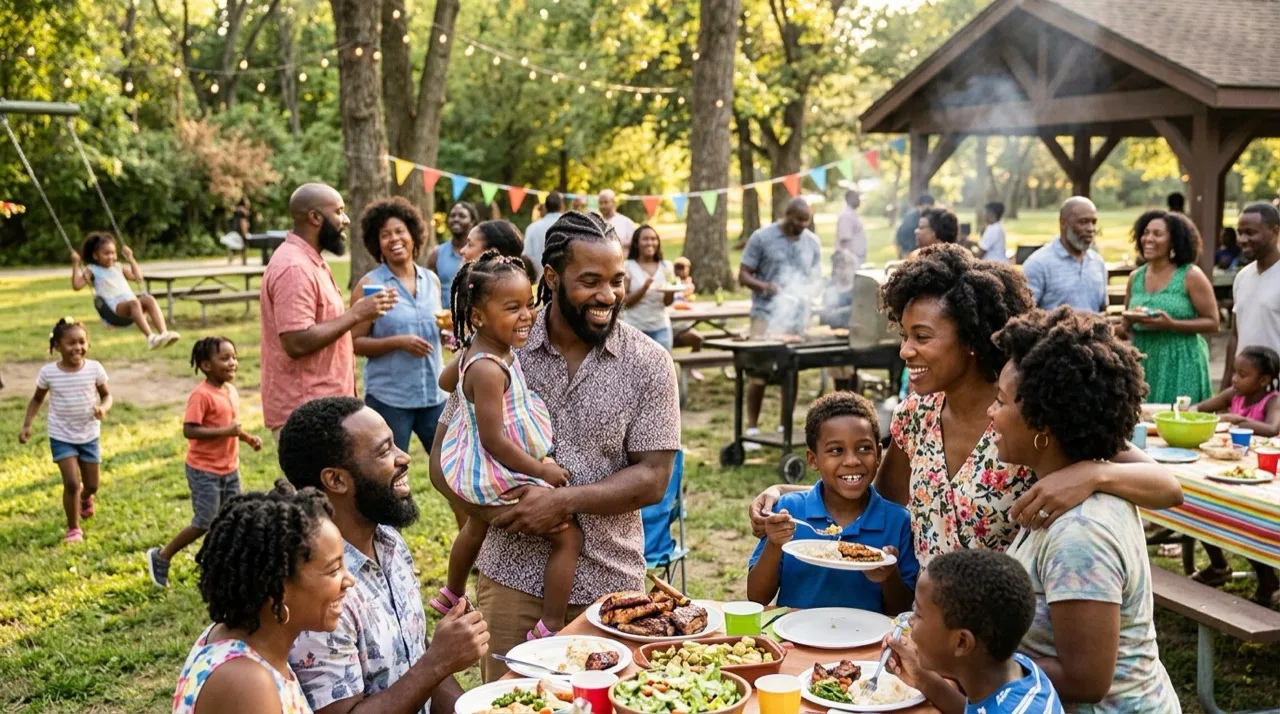
Building Community as a Homeschool Family
The question almost every homeschool parent hears within the first month is some version of this: "But what about socialization?" It is the wrong question, but it points at a real one. The deeper worry is not whether your child will learn to share a crayon. It is whether your whole family, parents included, will end up alone. The good news is that homeschooling has never been a solo endeavor, and it is becoming less so every year. The challenge, and the opportunity, is learning to build a homeschool community on purpose rather than hoping one finds you.
This piece is about how to do exactly that: how to find your people, sustain real belonging, and raise children who are deeply connected rather than isolated.
Homeschooling Is Booming, and So Is the Need for Connection
Homeschooling is no longer a fringe choice. An estimated 3.4 million school-age children were homeschooled in the United States during the 2024-2025 school year, roughly 6.3% of the K-12 population (Source: National Home Education Research Institute). The model is growing at about 4.9% a year, nearly three times the pre-pandemic pace, and in the 2024-2025 year 36% of reporting states logged their highest homeschool enrollment numbers ever, surpassing even the pandemic peaks (Source: JHU Institute for Education Policy).
That growth is also more diverse than the old stereotype suggests. The share of Black households homeschooling jumped from 3.3% at the start of the pandemic to 16.1% by that fall, the largest increase of any group (Source: TIME). For many of these families, the motivation is not religious withdrawal but the search for a culture of high expectations, safety, and an education that reflects their children's history and identity (Source: EdSurge).
Here is the catch. As more families step away from the default school building, they also step away from its built-in community: the pickup line, the class parents, the Friday game. Build nothing in its place and isolation can creep in. Research on homeschooling parents finds that those who take on the teaching role without enough support report higher burnout, and that lower-income families in particular experience a weaker sense of belonging (Source: K12 Tutoring). A strong homeschool community is not a nice extra. It is the thing that makes the whole choice sustainable.
What a Real Homeschool Community Actually Provides
When people picture a homeschool community, they often imagine a weekly playdate. It can be that, but the strongest communities do far more.
Shared workload and shared expertise
No single parent is excellent at everything. A good co-op lets a chemistry-minded parent run the lab while a musician leads choir and someone else coaches writing. Families pool resources, split the cost of field trips and materials, and trade the subjects they dread for the ones they love (Source: Omella). The result is a richer education than most parents could assemble alone.
Genuine socialization, the kind that lasts
In a consistent group, microschool, or co-op, children interact with the same peers week after week. That repetition is what builds real friendships and social-emotional skills, not the random churn of a crowded hallway (Source: Kaipod Learning). Mixed-age learning, a hallmark of co-ops and microschools, also teaches older children to lead and younger ones to stretch.
A lifeline for parents
Community is not only for the kids. Connecting with other homeschool parents, in person or online, reduces isolation and normalizes the hard days. As one veteran homeschooler put it, homeschooling without the fellowship of other homeschoolers is extra hard. Parents need a circle of friends walking the same road, people who understand the rhythm of a Tuesday at home with three kids and a math lesson gone sideways.
Practical Ways to Build Your Homeschool Community
You do not need to wait for a community to appear. Most families assemble theirs piece by piece. Here is a practical sequence that works.
1. Start with one consistent commitment
Belonging comes from repetition, not from attending everything once. Choose a single recurring anchor: a weekly co-op, a Monday park meetup, a monthly nature group. Showing up to the same thing on the same day is how acquaintances become friends.
2. Layer in different types of groups
Most thriving homeschool families belong to more than one circle, each serving a different need:
- Academic co-ops for shared teaching and harder-to-teach subjects.
- Social or activity groups for friendship, play, sports, and field trips.
- Interest clubs such as robotics, debate, art, or book clubs.
- Support groups for the parents, where the real talk happens.
You do not need all four at once. Add them as your capacity allows.
3. Use the networks that already exist
Local homeschool groups, libraries, community centers, faith communities, and statewide organizations are full of established meetups. National organizations and parent directories list co-ops by area (Source: HSLDA). Online communities help you find local families and offer day-to-day encouragement between gatherings.
4. If you cannot find it, start it
Some of the most meaningful communities began when one parent posted, "Anyone want to meet at the park on Thursdays?" Black families in cities like Birmingham have built entire co-ops this way, creating spaces shaped around their own values and expectations (Source: EdChoice). You may be the person others have been waiting for.
5. Protect the relationships, not just the calendar
Community survives on small, human gestures: remembering a birthday, bringing a meal during a hard week, following up after someone misses a gathering. Consistency and care, more than perfect organization, are what turn a group into a family.
How Family World School Helps
Building community from scratch takes time that many parents, especially those also working, simply do not have. This is where the cooperative model changes the math.
Family World School is a community-owned homeschool cooperative, not a marketplace. The difference matters. Instead of leaving you to vet strangers, hunt for classes, and assemble a social life alone, FWS gives families a ready-made community of carefully vetted educators and fellow families, with live online classes where children learn together and see the same faces each week. One flat, transparent monthly fee covers it, with no per-class scramble or surprise upsells.
The cooperative is built especially for African American and continental African families seeking high expectations, cultural affirmation, and real belonging, while remaining open to all. The goal is simple: no family should have to choose between the freedom of homeschooling and the connection of a community. You get both, by design.
The Takeaway
Homeschooling is growing fast, and the families who thrive over the long run are almost never the ones who go it alone. They are the ones who treat community as part of the curriculum: one steady commitment, layered circles, and a willingness to both join and start. Build that, and the worried question about socialization answers itself. Your children grow up connected, and so do you.
Ready to homeschool without the isolation? Explore Family World School's programs, book a quick consult, or join the community and meet families walking the same road.
Sources: National Home Education Research Institute, JHU Institute for Education Policy, TIME, EdSurge, K12 Tutoring, Omella, Kaipod Learning, HSLDA, EdChoice.